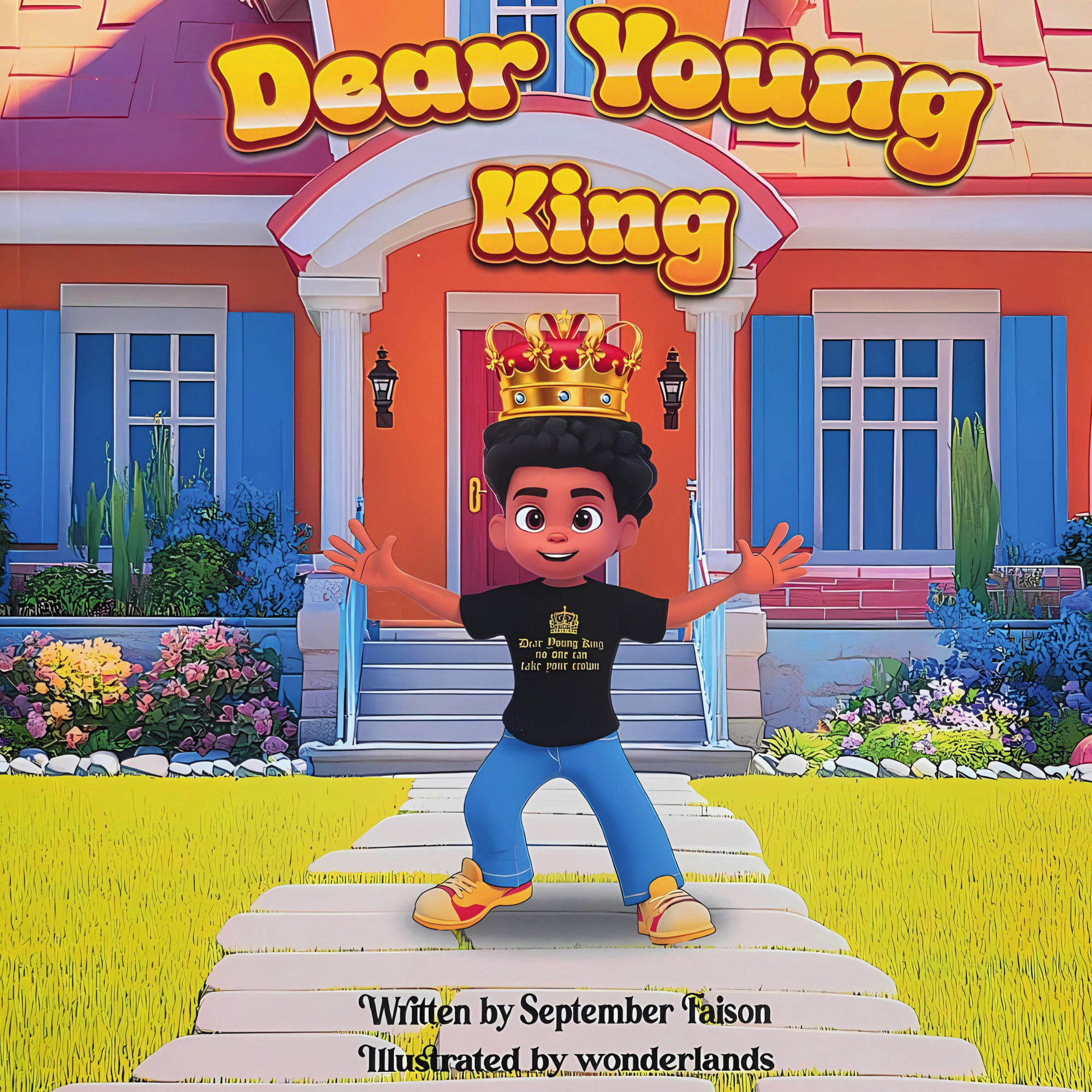
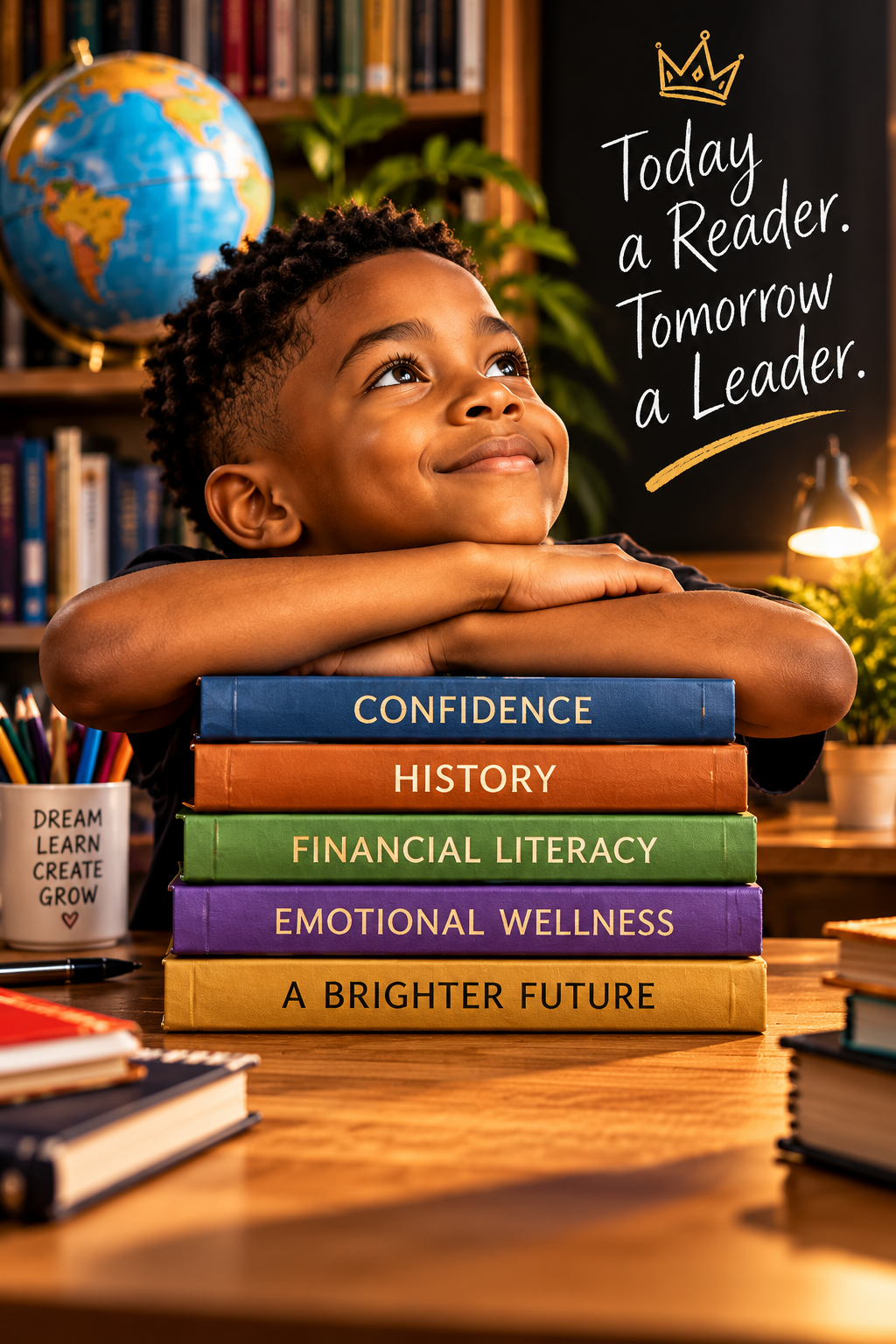
A child can tell in about two seconds whether a book was made for them.
They look at the cover. They look at the characters. They notice who wears the crown, who gets to be the hero, and who is missing. Children are always watching, and they draw conclusions long before anyone explains a thing to them.
That is why I write the way I do. When a Black or Brown child opens a book and sees a face like theirs, something in them ignites. The message is simple: you belong in stories. You belong in the ones about adventure, about family, and about greatness.
Here is what I hope a book can do.
It can show them their worth before society tries to define it. Dear Young King and Dear Young Queen say what every child deserves to hear: you were born with strength and royalty, and no one can take your crown.
It can tell them where they come from. Before the Chains begins with kingdoms, craft, and love, so a child can meet their Ancestors as builders and leaders, not only as survivors.
It can teach them something useful. Built to Prosper turns money basics into coloring pages and activities, because a child who understands saving and spending grows into an adult who can build.
It can give them permission to feel. Dear Black Child says out loud what many young people are taught to hide: your tears are not weakness. They are proof that you feel.
When you choose a book for a child in your life, a few questions can help.
• Do the characters look and live like real people, with families, neighborhoods, and feelings?
• Does the story show strength and softness together?
• Will the child come away knowing something new about themselves, their history, or their future?
• Would you be proud to read it aloud more than once?
Then read it together. Ask what they noticed. Ask who their favorite character was and why. Ask what they would have done in the story. Children tell us a lot when we give them room, and a book is a good doorway.
Not every child grows up seeing themselves in the stories around them. We can change that one book, one bedtime story, and one classroom at a time.
If you are not sure where to start, the whole collection is in the shop. Pick the one that fits the child you are thinking of, and read it with them tonight.
Why representation in books matters so much
Researchers who study children's literature use a phrase that has stuck with me: books can be mirrors, windows, and doors. A mirror lets a child see their own life reflected back at them. A window lets them see into a life different from their own. A door lets them step into a story and imagine themselves inside it.
For decades, most of the mirrors on bookstore shelves showed the same kinds of families and the same kinds of faces. Black and Brown children were far more likely to find windows and doors than mirrors. That imbalance sends a quiet message: stories are about other people, and you are the audience, not the subject.
This is not a small thing. Studies on childhood identity consistently show that seeing your own culture, family structure, and community reflected in books supports self-esteem, reading engagement, and academic confidence. Children who see themselves in stories read more, ask more questions, and carry a stronger sense that their experience counts.
What this looks like in everyday life
You do not need a stack of research to notice this. Watch a child's face when a character in a book looks like their cousin, wears their hairstyle, or celebrates a holiday the way their family does. There is a particular kind of pridefulness that comes over them, a recognition. That prideful feeling is worth protecting.
The same is true in reverse. When a child never sees their own life in a story or positive light, they learn to translate constantly, to imagine themselves into someone else's world just to enjoy a book. That is a heavier lift than most adults realize, and it is one more reason representation matters at every age, not only in early childhood.
Building a home library that reflects your child
You do not need dozens of books to make a difference. A shelf with even five or six titles that reflect a child's identity, history, and possibilities can shift how they see themselves and their future. Rotate in library books for variety, and keep the mirrors close at hand for rereading, because children often return again and again to the stories that make them feel most seen.
Quick answers
What age should representation in books start? As early as board books. Babies and toddlers absorb images long before they understand plot, so diverse faces belong on the shelf from the very beginning.
Does representation matter for adults who read to children? Yes. When a parent, teacher, or grandparent reads a story that reflects their own history, it models pride and belonging for the child listening, not only the child on the page.
Where can I find more books like these? Start with the Shop page for the full collection, and look for independent Black-owned bookstores and libraries, which often curate strong, specific recommendations by age and theme.